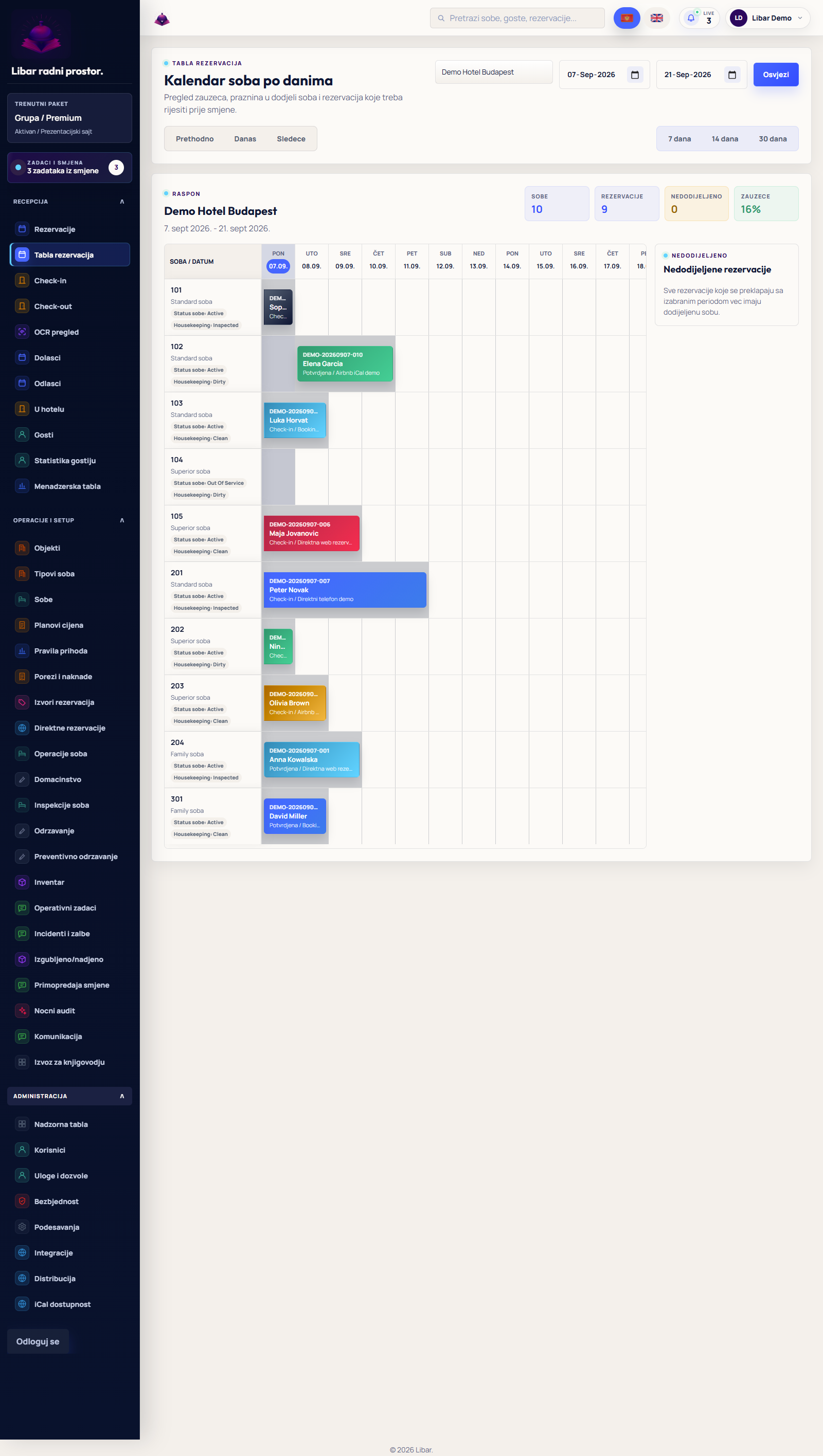
What a hotel PMS is
A PMS, or property management system, is the hotel's central operational system. It connects reservations, guests, rooms, rates, stays and billing so reception does not have to reconstruct the same context from spreadsheets, messages and several programs.
The value of a PMS lies in the next shift seeing an accurate status and being able to continue safely, rather than in the number of screens.
From reservation to check-out in one workflow
A reservation enters the calendar and availability, is linked to a guest and accommodation unit, and has its notes and room readiness checked before arrival. Tasks and folios stay in the same context during the stay. Check-out is completed with payment, an invoice and a review of outstanding obligations.
- Reservation board and availability review
- Arrivals, in-house guests and departures
- Check-in, room assignments and guest documents
- Folios, payments, invoices and check-out
- Operational and financial reports
Reception, housekeeping and management see what they need
Room status and tasks are shared with the teams that need them, while access to guest data, properties and sensitive actions remains limited by role. Management gets an overview without confusing responsibilities.
What every part of the team gets from PMS
Reception gets an overview of arrivals, stays, departures and outstanding obligations. Housekeeping gets priorities, room statuses and inspections. Maintenance tracks faults and preventive plans, while management uses reports, access controls and audit trails to oversee work.
- Reception: a faster path from reservation to check-out
- Housekeeping: priorities based on actual arrivals
- Maintenance: owner, deadline and task history
- Management: operational overview and responsibility
- Administration: controlled exports and reporting data
PMS is not the same as channel manager or booking engine
A PMS manages operations inside the hotel. A channel manager exchanges availability, rates and reservations with supported sales channels. A booking engine receives direct enquiries from the hotel's website. Work is smoother when these three layers connect, but each solves a different problem.
| System | Main role | When Needed |
|---|---|---|
| PMS | Reservations, guests, rooms, stays, billing and operations | The base of daily hotel work |
| Channel Manager | Exchange data with supported sales channels | When the hotel actively sells over connected channels |
| Booking engine | Direct search and booking on the hotel website | When the hotel wants more direct enquiries and confirmations |
Data and access stay within controlled boundaries
Libar separates data by tenant and property, limits access by role and keeps an audit trail of important actions. This does not replace internal hotel procedures, but provides the technical basis for each team member to work within their scope.
Onboarding based on real hotel workflows
Setup includes the property structure, rooms or units, users, initial rules and agreed data scope. Test imports and sample checks precede live work, while training follows roles and specific daily scenarios.
The presentation also checks exceptions: a room change, partial payment, late departure, an out-of-service room and a reservation from a supported channel.
Three situations to test during a demonstration
Test reception software against a day with arrivals, departures and changes. During a Libar demonstration, walk through these scenarios using your hotel’s room structure and staff roles.
| Hotel scenario | What to check in the software |
|---|---|
| A guest arrives before the room is ready | Whether reception can see the cleaning status and who is responsible for preparing the room. |
| A guest changes rooms during their stay | How room assignment and availability are checked while retaining the stay overview. |
| A guest is checking out with outstanding charges | How reception reviews the folio, recorded payments and outstanding amounts before completing check-out. |
How much does hotel management software cost?
Libar plans start at €29 per month for Domaćin. Direkt is €59, Hotel Pro is €99 and Grupa / Premium is €199 per month. The pricing page also lists six-month and annual totals.
Before quoting, we confirm the number of properties, reception workflow, direct bookings, supported channels, data import and training. Tax, external provider fees and additional work are confirmed according to the customer and agreed scope.