What do hotel reception operations include?
Reception follows the stay from the first enquiry or booking to the guest’s departure. That includes preparing arrivals, checking rooms, welcoming guests, handling information and requests during the stay, settling charges and passing important details to the next shift.
This work is connected to the rest of the hotel. Reception needs reliable updates from housekeeping, maintenance and billing. Those teams need to know what was promised to the guest and when.
Start of shift: establish the current position
Before new calls and arrivals, check who is arriving, who is leaving and who is already in house. Early arrivals, late departures, room changes and notes affecting preparation deserve particular attention.
Treat the previous handover as a list of open actions, rather than a record to file away. For each important item, make clear what is pending, who owns it and when it needs checking.
- Review arrivals, departures and occupied rooms.
- Check which rooms are awaiting cleaning, inspection or repair.
- Identify unresolved guest requests and outstanding charges.
Before arrival: align the booking with room readiness
Check the dates, guest count, accommodation type and important booking notes. If a room is not ready, reception should see its actual status and know whom to contact instead of promising an unconfirmed time.
When the plan changes, record it with the booking and tell the team it affects. One current record is more useful than several messages containing different versions of the same arrangement.
Check-in: confirm the arrangement before handing over the key
On arrival, confirm the booking and readiness of the assigned room, explain the important terms of the stay and record the information required by the hotel’s process. Limit access to documents and personal data to authorised team members.
If the room is not ready or the allocation has changed, tell the guest what is confirmed and what you are still checking. Update the record at the same time so the next shift does not work from an outdated plan.
During the stay: every request needs a follow-up
A guest question, fault or room change may begin at reception and finish with another team. Record enough context for the person taking over to understand the task, without adding sensitive information that the task does not require.
Once a request is resolved, check the outcome and close it in the record. The guest needs an answer; the next shift needs a record that the answer was given.
Check-out: complete the stay without outstanding surprises
Before issuing the bill, compare the stay charges, recorded payments and any extras. If something is unclear, check with the responsible colleague before completing check-out.
After departure, update the stay and room status and pass relevant information clearly to housekeeping or the next shift. The exact sequence and documentation depend on the hotel’s procedures.
Shift handover: record what comes next, not only what happened
A good handover briefly covers pending arrivals, rooms that are not ready, guest requests, unresolved payments and time-sensitive arrangements. Naming the owner and the next action makes each note useful.
It also helps to confirm when nothing remains open. The aim is for a colleague to continue without guessing or searching private messages.
A short checklist for each day
Adapt this list to your hotel’s size and procedures. It is a reminder of the information reception needs to pass on.
| Stage | Question to check | Who needs the update |
|---|---|---|
| Start of shift | Who is arriving, who is leaving and what remains open? | The incoming reception shift |
| Before check-in | Do the booking and room status match the arrangement? | Housekeeping or a manager if there is a discrepancy |
| During the stay | Are any requests missing an owner or deadline? | The team handling the request |
| Before check-out | Have the charges and payments been reconciled? | The person responsible for billing if there is a difference |
| End of shift | What must the next colleague do, and by when? | The next shift |
Where does a PMS help in this workflow?
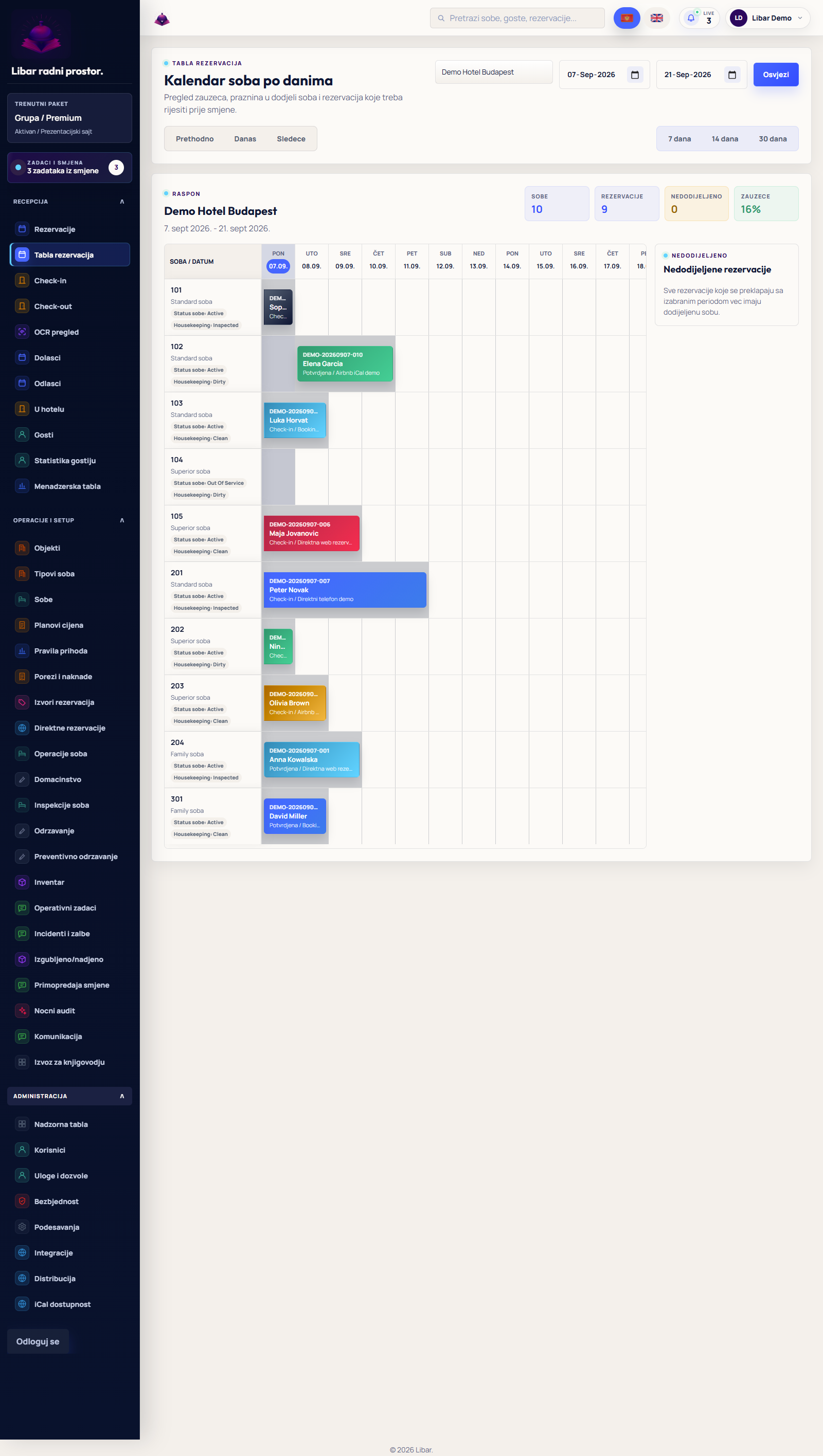
A PMS links the booking, guest, room, stay and billing in one record. When tasks and room status connect to that workflow too, reception can more easily see the next action and what has already been completed.
Software does not make these decisions for the team. The hotel still needs to define who confirms room readiness, who handles exceptions and what belongs in a handover. The Libar PMS page shows how these operational steps connect in the product.