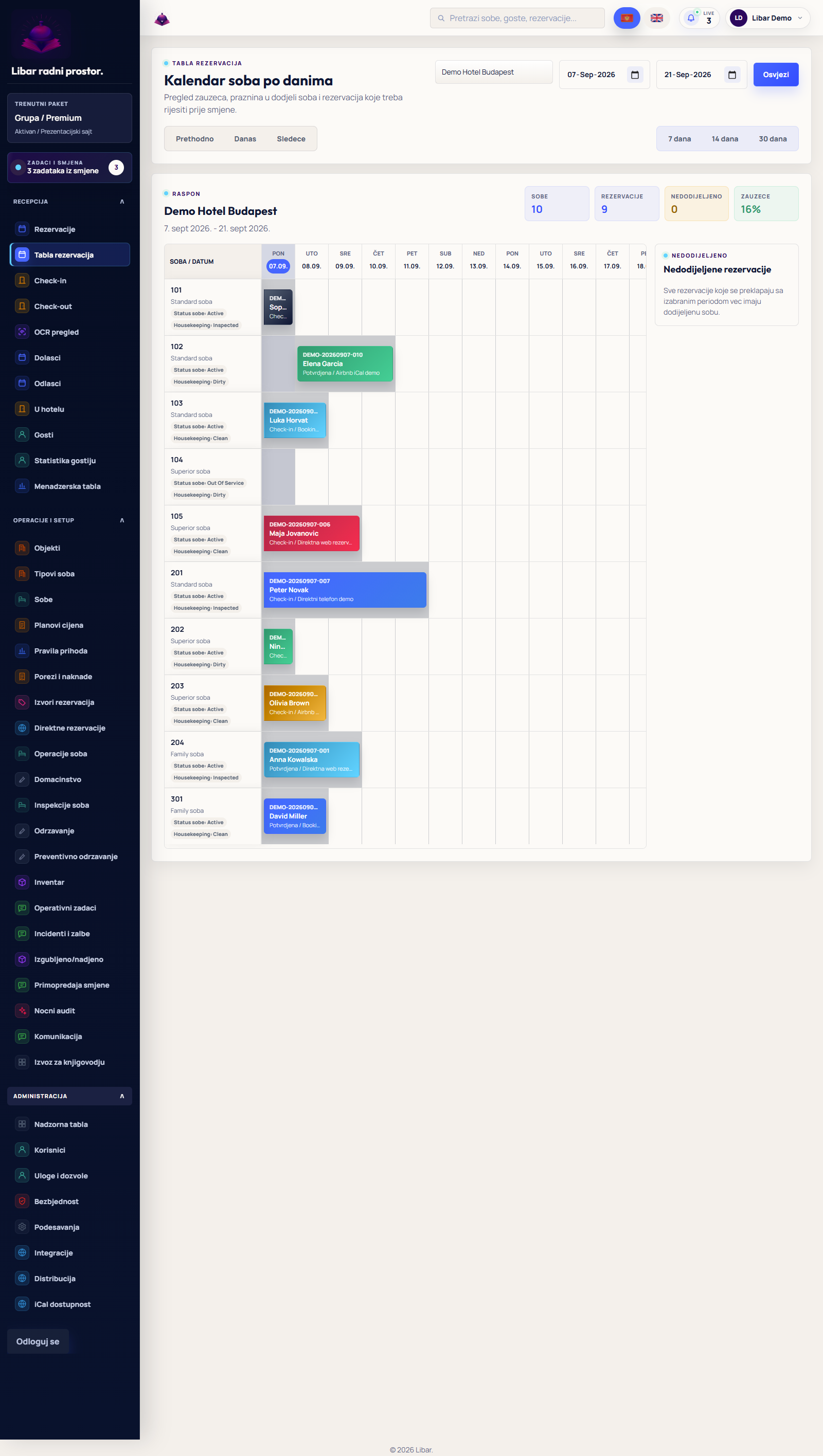
Draw a hotel day
Write down how reservations arrive, who confirms the rate, when a room is assigned, how housekeeping reports readiness and what is checked before check-out. The demonstration must follow that flow.
Check the data and permissions
Ask where the data is stored, how the hotels and facilities are separated, who can see or change the guest data and whether there is an audit trail.
Separate essentials from preferences
The calendar, reception, guests, rooms and billing may form the foundation. Direct sales, a channel manager, multiple properties and API integrations are added as needed.
Rate systems using the same criteria
Create a short comparison table before presentations and tie each rating to evidence you see. This keeps an attractive interface from being confused with data security, integration scope or the team's readiness to migrate.
| Criteria | What to look for at the demonstration | Evidence before the decision |
|---|---|---|
| Daily flow | Reservation, arrival, room change and check-out | Demonstration using your scenario |
| Data and access | Roles, properties, audit trail and export | Permissions view and a sample export |
| Integrations | Exact channel, synchronisation direction and recovery | Written confirmation of supported scope |
| Onboarding | Import, checks, training and cutover date | A plan with responsibilities |
| Price | Licences, users, properties, add-ons and support | Total offer without hidden assumptions |
Compare total cost
The monthly price is only part of the decision. Include import, training, support, add-ons, user and property counts, and the risk of downtime.
Recognize the warning signals
Be cautious if the provider cannot explain data ownership and export precisely, if “all channels” has no publicly or explicitly documented scope, if pricing depends on add-ons revealed only after the demonstration, or if onboarding lacks a responsible person and a verification plan.